Communications & Policy Work by Nasaiah Algarin
A collection of writing, visual design, and social media content produced for the DC State Board of Education, focused on making education policy accessible and engaging for DC families.
A standout signature project, plus recent policy commentary, campaigns, and brand design.
A month-long series honoring 100 years of Black History Month, celebrating DC educators and leaders.
Strategic Communications Fellow
Washington, DC
At the DC State Board of Education, I bridge the gap between policy and people. My work focuses on making complex education policy accessible and engaging for DC families across all 8 wards.
I lead communications strategy, visual design, and bilingual outreach efforts, ensuring that every student, parent, and community member can understand and engage with the decisions that shape DC education.
Education is the great equalizer, but only when people can access and understand it. Too often, education policy feels distant and bureaucratic to the families it's meant to serve.
I believe in the power of clear communication and thoughtful design to break down those barriers and build trust between institutions and communities.
"Every DC student deserves an education system that sees them, supports them, and communicates with them in ways they can understand and trust."
This portfolio showcases my work in three key areas: policy writing and commentary, social media campaigns and graphic design, and comprehensive brand development.
Each piece represents my commitment to making education policy accessible, engaging, and impactful for DC families.
Interested in collaborating or learning more about my work? I'm always open to conversations about education communications, policy outreach, and community engagement strategies.
While we serve all Board representatives and the DC community, here is my direct reporting structure and the team I work with daily.
See how strategic communications can transform education policy engagement.
Blogs, Press Releases, and Policy Commentary
Press releases and analysis on education policy issues affecting DC students, from career readiness to restorative practices to supporting students with disabilities.
Full-tenure readership data for the State Board's Education in DC blog covering my time as Strategic Communications Fellow.
Across the year, my 2,934 views accounted for roughly 55% of total blog traffic — the largest single-author share on Education in DC. Five of the top ten most-read posts site-wide were pieces I authored. Visitor growth of 27% year-over-year tracked alongside a deliberate strategy of pairing every blog post with a bilingual campaign graphic and a clear referral path from LinkedIn, Facebook, and the SBOE website.
SBOE Family Resource Library & Survey Research Study
A bilingual D.C. public-education resource library, grounded in original survey research with 102 D.C. families across all eight wards. Free, plain-language, print-first, web-native, openly licensed.
D.C.'s education governance is fragmented across the SBOE, OSSE, DCPS, and dozens of public charter LEAs. The Language Access Act of 2004 exists on paper. Families' lived experience is different.
D.C. families have to coordinate across SBOE, OSSE, DCPS, the Public Charter School Board, and individual LEAs to make a single educational decision for their child.
Survey families had heard of the institutions but couldn't describe what they do, when to use them, or how decisions get made. Awareness without understanding is not access.
The Language Access Act of 2004 mandates multilingual government services. Non-English-speaking households still reported significantly more difficulty understanding D.C. education policy.
A 14-question instrument fielded to 102 D.C. parents and guardians. Analyzed with descriptive statistics, a chi-squared test of independence, and an independent-samples t-test. Three hypotheses tested. H2 and H3 supported. H1 not supported.
vs only 52.0% who can describe what it does. The familiarity-vs-knowledge gap is the headline finding.
Independent-samples t-test: non-English-speaking households reported significantly more difficulty understanding D.C. policy. A medium-to-large effect.
Even English-speaking families rated D.C. education policy materials only 3.30 out of 5. Plain language is a universal need, not a courtesy.
Inductive coding of free-response answers converged on four themes. Each one is now a non-negotiable constraint on every document in the toolkit.
The full 22-page report includes a chi-squared test of ward × awareness, the language × ease-of-understanding t-test, the descriptive familiarity-vs-knowledge gap, five recommendations to the SBOE, an APA 7 reference list of roughly 50 sources, and the survey instrument in the appendix.
Every artifact in the library answers something the survey said families needed. The research-to-product loop is the whole story.
An interactive tool that asks a family about their student's grade, language needs, and pathway questions, then surfaces the specific toolkit documents relevant to their situation. Built so a parent doesn't have to read all 22 documents to find the three that matter for them this week.
IEP, 504, AP, IB, CTE, FAFSA, DC TAG, CLCP, lottery, weighted lottery — every acronym and term translated into a sentence a parent can act on. Searchable, bilingual, and linked from every other document.

A directory of the Ombudsman for Public Education, DC-CAP, OSSE, school enrollment lines, and the Office of the Student Advocate — with phone numbers families can actually call. Plus a screen-only "Suggest a fix" pill on every doc and a standalone feedback form.
Free, in-browser, printable, openly licensed. Designed for D.C. families first, but built to be picked up by the agencies and partner organizations they already trust.
A single fellow shipped the research study, the 22-document library, and the full multi-page bilingual site. The fact that it's a one-person product is part of the work.
The five recommendations in the survey report drive the next phase. The library is a living product, not a deliverable.
DC State Board of Education • 2026
A visual language rooted in Washington DC's geography, culture, and civic spirit, designed to elevate education policy and empower every student to rise.
Every element of this visual identity is intentional—drawn from the rivers, neighborhoods, and civic soul of Washington, DC. These aren't arbitrary colors; they're symbols of our commitment to nearly 100,000 students across all 8 wards.
The DC State Board of Education operates at the intersection of policy and people. We present testimony at formal government hearings, but we also hold town halls in community centers across the city. Our previous visual identity—anchored by the DC flag's bold red—served us well for official contexts, but felt aggressive in digital spaces and didn't allow for the nuance our communications require.
We needed a system that could feel authoritative in a legislative hearing and welcoming at a community conversation. One that honored DC's heritage while speaking to the future our students are building. One that worked as well on a mobile screen as on a letterhead.
Grounded but forward-looking. Our primary colors anchor us in DC's governmental and geographical identity—the deep slates of federal buildings, the blues of our rivers. Our accent colors speak to growth, warmth, and possibility.
Flexible but cohesive. The gradient system allows us to shift tone: formal Authority gradients for official documents, energetic Sunrise gradients for student spotlights—while always feeling unmistakably SBOE.
Named with intention. Every color name references something specific to Washington, DC. Capitol Slate. Potomac. Anacostia. Cherry Blossom. When our team uses these colors, they're reminded of who we serve and where we serve them.
The DC flag's three red stars and two red bars are iconic. We didn't want to abandon that connection—but pure red (#FF0000 or similar) creates problems: it reads as "error" in digital interfaces, feels aggressive in large applications, and limits our design flexibility.
DC Coral (#D4736C) maintains the warmth and energy of red while being more versatile. It's still recognizably connected to our city's identity, but it plays well with our blue foundation and allows for sophisticated gradient transitions. It says "DC pride" without shouting.
Each primary color carries meaning and history. Together, they represent the full scope of SBOE's mission—from governmental authority to student empowerment.

Supporting colors extend our range for gradients, illustrations, and layered designs. Each is named for a DC landmark or symbol.
Subtle background tints help organize content and carry semantic meaning.
Gradients express mood and create visual hierarchy. Each is designed for specific emotional contexts.
Gradient lines add polish and separate content sections. Each carries the same emotional weight as its parent gradient.

Typography carries as much meaning as color. Our type system balances governmental authority with human approachability.
Poppins has geometric confidence without feeling cold. Its rounded terminals feel modern and approachable—important for an organization serving families and students who may feel intimidated by government communications.
Montserrat was originally designed for urban signage, making it exceptionally readable at any size. For an organization that produces everything from one-page summaries to 50-page reports, readability matters.
Together, these fonts feel both governmental and human. They say "we're an official institution" and "we're here to help you" simultaneously.
Our logo works across all contexts. Each color variant is designed for specific background situations.
Contrast is king. The logo must always be clearly legible. On light backgrounds, use dark variants. On dark or gradient backgrounds, use white.
Checkered = transparency. The checkered background indicates transparent areas—important for layering over photos or gradients.
Colored logos carry meaning. Capitol Slate says "official." Rising Teal says "student-focused." Choose based on content tone, not just aesthetics.


Copy and paste into CSS, Figma, Canva, or any design tool.
Download official SBOE logos and icons in high-quality transparent PNG or scalable SVG format. Every variant is optimized for professional use.

Transparent background, perfect for documents, presentations, and digital media. Maximum resolution for crisp display at any size up to the original dimensions.
Vector format that scales to any size without quality loss. Ideal for print, large displays, and web development. Fully editable in design software.
The primary logo format for most applications. Features the full SBOE seal in a square aspect ratio.


Ideal for letterheads, email signatures, website headers, and wide format displays.


The abbreviated mark for favicons, social media profile pictures, app icons, and compact spaces.


Development, Recognitions, and Connections
Learning and growing through roundtable dialogues, professional development opportunities, and recognition for the work we do at SBOE.
A lunch dialogue with The Education Trust on equity in P-12 and higher education policy.
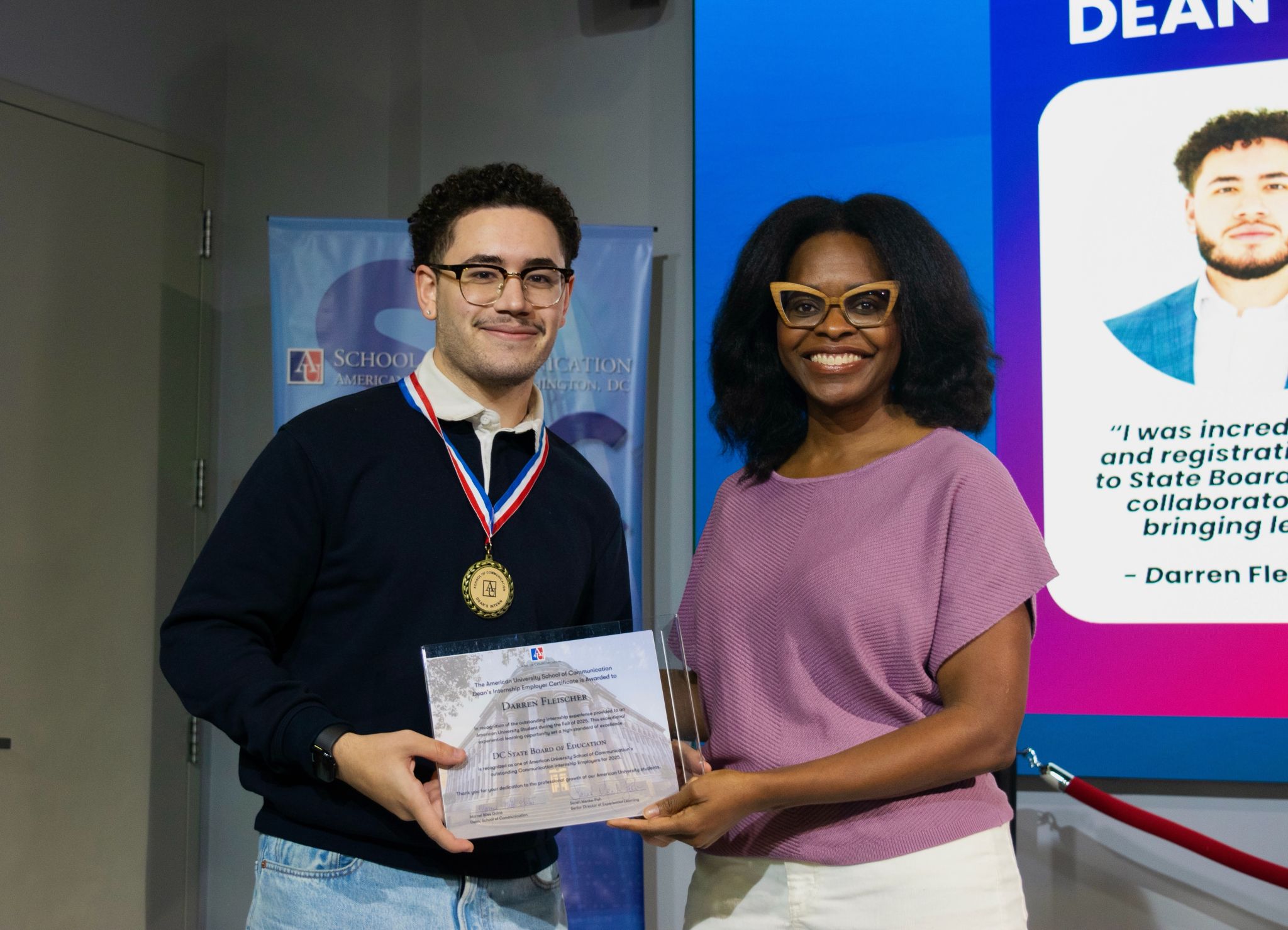
Recognitions received for my work and contributions at the DC State Board of Education.